
Total Knee Replacement Surgery: Procedure, Benefits & Recovery
Center : Orthopedics Center
Article by : Dr. Nithiwut Pinsiranon
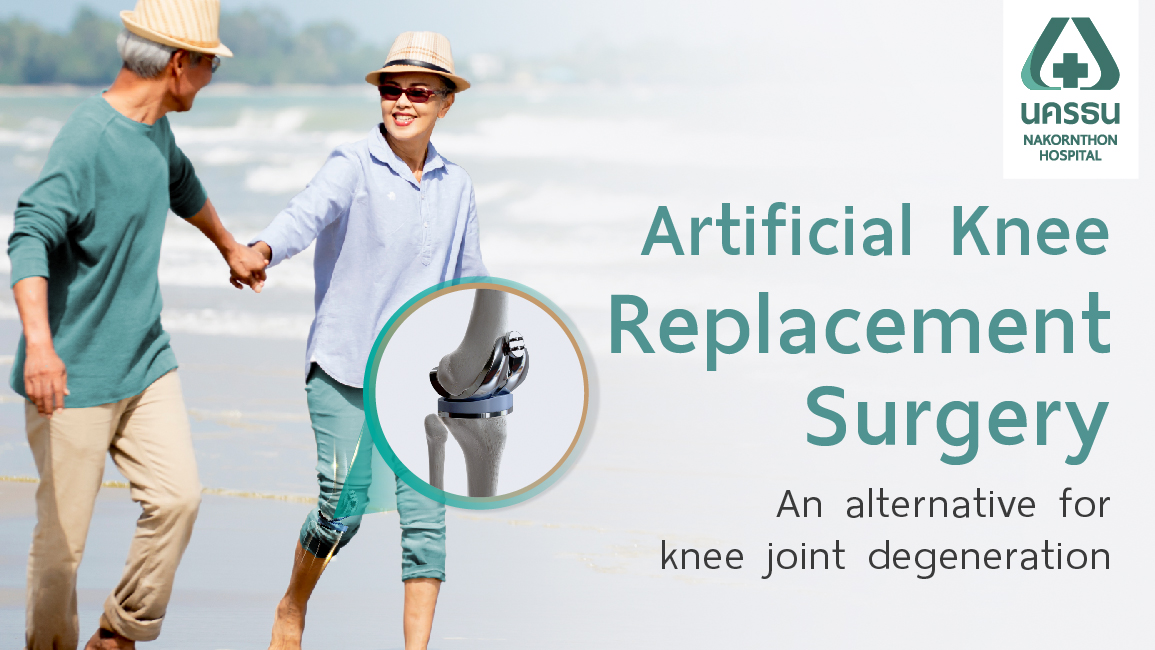
- Total knee replacement is a surgical procedure that removes the worn surface of the knee joint and replaces it with a metal and polyethylene prosthetic, restoring function and eliminating chronic osteoarthritis pain.
- More than 90% of knee replacement patients experience significant pain reduction and return to near-normal daily life after surgery.
- Surgery is indicated when knee osteoarthritis is severe, when X-rays confirm significant joint deterioration, and when other treatments, including medication, injections, and physical therapy, have not provided adequate relief.
- Nakornthon Hospital Orthopedic Center uses Peripheral Nerve Block analgesia, ultrasound-guided anesthesia injected around the peripheral nerves, for safe, effective post-operative pain control that reduces reliance on opioids and supports faster recovery.
- Hospital stay after surgery is typically 4–5 days, with walking beginning 1–2 days post-procedure under physiotherapist supervision. Full knee replacement surgery recovery to normal daily activity takes approximately 6–12 weeks; a complete return to all activities may take up to 12 months.
- Knee replacement implants are designed to last 15–20 years with proper care and activity management.
The knee joint is an important part of the body used for movement, whether standing, walking or sitting. When the knee joint deteriorates, it may cause pain when moving and can affect daily life. The Total Knee Arthroplasty (TKA) replacement procedure is a treatment option for people with severe knee osteoarthritis. It is made by removing the deteriorated knee surface and replacing it with an artificial knee joint. This is an effective surgical procedure. However, the patient will not have pain after surgery like in the past. Because the patient will receive care and pain will be relieved after surgery. By injecting anesthesia around the peripheral nerves (Peripheral Nerve Block), which is a highly effective and safe analgesic method, it can reduce the body's response to the stress of surgery. Make patients restore movement and regain a good quality of life.
Table of Contents
- Osteoarthritis: Warning Signs, Causes & Risk Factors
- Knee Replacement Surgery Benefits to Treat Osteoarthritis
- Indications for a Total Knee Replacement Procedure
- Preparation Before a Total Knee Replacement Procedure
- How Does Knee Replacement Surgery Work?
- What to Expect After Knee Replacement Surgery: Recovery Timeline
- Knee Replacement Surgery at Nakornthon Hospital Orthopedic Center in Bangkok
- Frequently Asked Questions (FAQs) About Total Knee Replacement Surgery Procedure
- Free Online Consultation with a Specialist
Osteoarthritis: Warning Signs, Causes & Risk Factors
Osteoarthritis is caused by degeneration of articular cartilage in terms of shape, structure, and function of bones, joints, and nearby joints. The changes that occur cannot be returned to their original state and may have more severe deterioration accordingly in relation to the following factors:
Factors That Cause Osteoarthritis of the Knee
- Age: The older you get, the more likely it is due to longevity.
- Gender: Females are twice as likely to suffer from osteoarthritis than males, particularly after menopause, when hormonal changes affect joint tissue.
- Body Weight: Excess weight places significantly more load on the knee joint, accelerates cartilage breakdown, and is one of the most directly modifiable risk factors.
- Knee Joint Usage: People who squat, sit cross-legged, or sit with knees folded or stay in positions that place repeated compressive stress on the knee cartilage for long periods of time may accelerate the early onset of osteoarthritis.
- Knee Injuries: People with a history of knee injuries, such as fractured knee joints, torn ligaments, or meniscus damage, have an increased likelihood of developing osteoarthritis of the knee due to reduced joint stability and muscle and bone strength.
Knee Replacement Surgery Benefits to Treat Osteoarthritis
Knee replacement surgery for osteoarthritis is an increasingly popular treatment option. Results are fast, and a full recovery after knee replacement surgery is possible, allowing the patient to return to normal life without suffering knee pain again. The replacement knee joint surface is made of stainless steel mixed with nickel, cobalt, titanium, and the prosthesis is made of a special plastic material (Polyethylene), which is non-reactive to the body, lightweight, and durable.
Indications for a Total Knee Replacement Procedure
Who should have a total knee replacement procedure? Those who will benefit most from a knee replacement are as follows:
- Have severe osteoarthritis of the knee, with wear and tear that is clearly visible on radiographs; joint space narrowing, cartilage loss, and bone-on-bone contact are clearly visible.
- Pain, swelling, and stiffness in the knee joints affect the ability to do basic daily activities, including walking, climbing stairs, or standing for extended periods.
- Conservative treatments have been ineffective. The patient has tried and not achieved adequate relief from non-surgical approaches, including anti-inflammatory medications, physiotherapy, corticosteroid or hyaluronic acid injections, and weight management.

Preparation Before a Total Knee Replacement Procedure
Good preparation before surgery directly affects both the surgical outcome and the speed of recovery. Your care team will provide specific instructions, but general preparation guidelines include:
Physical Preparation
- Eat nutritious food from all food groups but when you are full, drink 6-8 glasses of water a day and control your body weight properly.
- Exercise to strengthen muscles, particularly in the thigh muscles (quadriceps), to support the new joint and speed recovery. Exercise that is suitable for your physical condition, such as walking, brisk walking, swimming, or cycling, should include lung training through frequent, long, deep breaths.
- Beware of infection in various parts of the body that may go to the prosthesis. If there is a problem, you should see a doctor before surgery, such as a wound on the body or burning pain when urinating, which may be caused by urinary tract inflammation. Oral health procedures, such as teeth fillings and scaling, should be done before surgery.
- Stop smoking at least 6 weeks before the surgery. Smoking significantly impairs tissue healing and increases infection and complication risk.
- Abstain from drugs that affect blood clotting, such as aspirin, for a week before surgery or according to the treatment plan to prevent heavy bleeding during and after surgery.
Psychological Preparation
- Practice calming mindfulness techniques to keep your mind clear and relaxed.
- If there are concerns about the treatment, post-op care, or expenses, or if you have any doubts about the procedure, consult with your medical practitioner prior to the surgery.
After-Care Preparation
- Caregivers should be prepared to assist the patient in the postoperative period for at least 2 weeks or as appropriate.
- Prepare the environment to optimize the patient’s comfort and recovery, such as sleeping on a knee-high bed on the ground floor and keeping the area clean, tidy, and free from clutter to prevent tripping. The toilet floor and surfaces should be kept dry to avoid slipping.
- Move commonly used items to accessible locations so you do not need to bend, reach high, or climb stairs during early recovery.
How Does Knee Replacement Surgery Work?
Surgical Procedure
A total knee replacement procedure is a surgery to replace the surface of the 3 bones that make up the knee joint: the femur (thigh), tibia (shin), and patella (knee cap). The surgeon will cut the worn or inflamed part of the joint surface, which has a thickness of about 8-10 millimeters. The surgeon will then place a prosthesis on the femur and the shin bone, both of which are made of fine metal, with a special plastic that acts like cartilage sandwiched between the metal prosthesis. The prosthesis inserted behind the kneecap is also made of plastic, and a special cement is applied in between to hold the prosthesis and the bone. Therefore, the prosthesis is strong and durable for a long time.
The entire procedure typically takes 1–2 hours under spinal or general anesthesia. The outcome of joint replacement surgery is that more than 90% of joint replacement surgery patients experience reduced pain and can return to daily life close to normal.
After Surgery
One concern among patients undergoing knee replacement surgery is recovery and the pain after the surgery. At Nakornthon Hospital, patients receive advanced care and relief from pain after surgery with anesthesia injected around the peripheral nerves (Peripheral Nerve Block), which is a highly effective, safe, and widely used analgesic method. It is a multimodal analgesia, which can relieve pain well and help reduce complications from the use of non-steroidal drugs (NSAIDs) and opioids.
Pain Relief Injection Procedure
Anesthesia is injected with a needle or catheter into the peripheral nerves. An anesthetic will inhibit the conduction of nerve signals from entering the spinal cord. This is done under ultrasound, where the doctor examines the nerves before giving the medication, ensuring safety and accuracy for effective pain relief. It helps to reduce the body's response to the stress of surgery for faster recovery and to reduce the length of hospital stay.
What to Expect After Knee Replacement Surgery: Recovery Timeline
In Hospital (Days 1–5)
After surgery, most patients remain in hospital for 4–5 days. Within 1–2 days of the procedure, your physiotherapist and surgeon will have you begin walking with a walker. Earlier mobilization is a key part of modern knee replacement surgery recovery and significantly improves outcomes compared to extended bed rest. Regular doctor appointments are scheduled during the hospital stay to monitor healing, check for signs of infection, and assess joint stability and movement.
Early Home Recovery (Weeks 1–6)
Once discharged, the focus changes to building strength, restoring range of motion, and gradually increasing independence. Physiotherapy continues, either at home or at the hospital on an outpatient basis, and is one of the most important factors in the quality of the long-term outcome. During this period:
- Walking with a walker or cane is normal; most patients transition off assistive devices within 4–6 weeks
- Wound care and monitoring for signs of infection or unusual swelling continue
- Driving is not permitted until your surgeon clears you, typically 4–6 weeks after surgery, depending on which leg was operated on
- Light daily activities such as cooking, personal care, and gentle walking are progressively resumed
Return to Full Activity (Weeks 6–12+)
By 6–12 weeks, most patients have returned to light daily activities and are walking without assistance. Stair climbing, longer walks, and light recreational activities are typically possible by this stage. A complete return to all activities, including more physical pursuits, may take up to 12 months as the muscles around the joint fully regain their strength and the body adapts to the new prosthetic.
Knee Replacement Surgery at Nakornthon Hospital Orthopedic Center in Bangkok
Knee replacement surgery is a treatment for severe osteoarthritis. This can be done by removing deteriorated knee skin and replacing it with artificial knee cartilage. It is a surgery aimed at improving the quality of life, supporting patient recovery as well as the ability to walk normally, or as close to normal as possible.
And thanks to advances in medical innovation, doctors can manage postoperative pain by injecting anesthesia around the peripheral nerves, which is a safe and effective method to help relieve pain and prevent various complications. To learn more about knee replacement benefits and what to expect after knee surgery, book a free online consultation with a specialist at our Orthopedic Hospital in Thailand.
For more information, please contact:
- Facebook Fanpage: Nakornthon Hospital - International Patient
- LINE Official: @nakornthoninter
- Tel: 02-450-9999 (Available 24 hours)
Frequently Asked Questions (FAQs) About Total Knee Replacement Surgery Procedure
-
Q: How long does a knee replacement last?
A: Modern knee implants are designed to last 15–20 years in most patients. Longevity is best maintained by keeping a healthy weight, avoiding high-impact activities, and attending regular follow-up appointments. Revision surgery is possible if an implant eventually wears out after many years of use.
-
Q: How painful is a total knee replacement surgery procedure?
A: The procedure is performed under anesthesia, so there is no pain during surgery. Afterward, Nakornthon Hospital doctors manages post-operative pain using Peripheral Nerve Block analgesia, an ultrasound-guided local anesthetic delivered directly to the nerves around the knee. Most patients find the pain after surgery far more manageable than expected. Discomfort peaks in the first 2–3 days and decreases steadily from there.
-
Q: What activities should I expect to avoid after knee replacement?
A: Avoid high-impact activities that stress the prosthetic joint, including running, jumping, contact sports, deep squatting, kneeling, and pivoting on a planted foot. Well-tolerated long-term activities include walking, swimming, cycling, and golf. Your surgeon will provide specific guidance based on your implant and recovery progress.
-
Q: Can both knees be replaced at the same time?
A: Yes, a bilateral knee replacement in a single surgical session is an option for selected patients in good overall health with severe disease in both knees. The benefit of bilateral knee replacement is having one recovery period instead of two. Your orthopedic surgeon will assess whether simultaneous or staged replacement is more appropriate for your situation.
-
Q: How much does knee replacement surgery cost in Thailand?
A: Knee replacement in Thailand is typically 50–70% less expensive than equivalent surgery in the US, UK, or Australia, without compromising implant quality or surgical standards. The exact cost at Nakornthon Hospital depends on implant type, hospital stay, and the care required. Contact our Orthopedic Center directly for a personalized estimate.

Free Online Consultation

Article of Orthopedics Center


High-Speed CT scan 443 Slices: Precision, Speed, and Reduced Radiation Exposure